Feral Pigeon Control: A Guide for North East Scotland
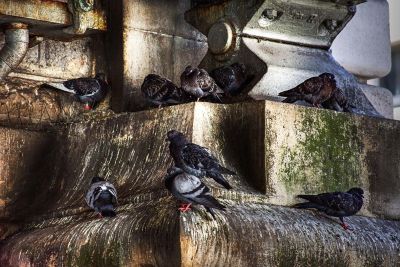
Feral pigeons are one of the most persistent pest bird problems in Aberdeen and the surrounding towns, particularly around older buildings, commercial premises, and city center properties. While often tolerated as part of the urban landscape, a resident pigeon population brings genuine practical problems: fouling that damages stonework and creates slip hazards, blocked guttering and drainage, nesting debris in roof spaces, and associated insect infestations. This guide explains what attracts pigeons to a property, where they typically roost and nest, and the control measures available.
Why Feral Pigeons Settle on Buildings
Feral pigeons are descended from rock doves, and their preferences reflect that origin — they treat buildings much as their ancestors treated coastal cliffs:
- Ledges and sheltered recesses. Window sills, string courses, parapets, and decorative stonework closely mimic natural cliff ledges, which is why traditional granite architecture across Aberdeen is so readily colonised.
- Reliable food sources. Discarded food in city centres, overflowing bins, spillage around commercial premises, and deliberate feeding by members of the public all sustain large populations.
- Warmth and shelter. Roof voids, plant rooms, and covered walkways offer protection from the North East's wind, rain, and winter temperatures.
- Safety from predators. Elevated, hard-to-reach positions on buildings give pigeons a secure roosting site with few natural threats.
- Site loyalty. Pigeons are strongly attached to established roosting and nesting sites and will return persistently, which is why removal alone rarely resolves a problem without physical proofing.
Pigeons can breed throughout the year where conditions are favorable, so a small roosting group can become an established colony relatively quickly.
Likely Roosting and Nesting Locations
Across North East Scotland, activity tends to concentrate on:
- Ledges, sills, and decorative stonework, particularly on older granite buildings in Aberdeen city center.
- Roof spaces and lofts, accessed through damaged slates, missing tiles, or gaps in the roofline.
- Under solar panels, which create an ideal sheltered cavity — an increasingly common issue on both domestic and commercial properties.
- Guttering, valleys, and box gutters, where nesting material quickly causes blockages and water ingress.
- Beneath eaves and soffits, offering shelter directly against the building.
- Plant rooms, lift motor rooms, and flat roof structures on commercial and industrial premises.
- Bridges, canopies, and covered walkways, including car parks and loading bays.
- Disused or poorly maintained buildings, where undisturbed access allows colonies to establish over time.
Signs of a Pigeon Problem
- Accumulated droppings on ledges, walkways, signage, and beneath roosting points.
- Nesting material — twigs, feathers, and debris — gathered in gutters, roof voids, or on ledges.
- Persistent noise, including cooing and movement from roof spaces or above ceilings.
- Blocked guttering or downpipes, often first noticed as overflowing water or damp ingress.
- Feather and dander accumulation around entry points.
- Secondary insect activity, as bird nests commonly harbour mites, beetles, and other insects that can subsequently enter living or working spaces.
Control Methods
Effective pigeon management focuses on making a building unattractive and inaccessible rather than on removing birds. The main measures are:
Site Survey
Identifying roosting and nesting points, access routes into voids, food sources, and the scale of the population. This determines which proofing measures are appropriate and where they'll be most effective.
Netting
Heavy-duty bird netting tensioned across recesses, courtyards, underside of canopies, or beneath solar panels physically excludes birds from an area. It's among the most effective long-term solutions for larger or complex elevations, and can be specified in colors that blend with the building.
Anti-Roosting Spikes and Wire Systems
Discreet stainless steel spike or post-and-wire systems fitted to ledges, sills, and parapets prevent birds landing without harming them. Well suited to narrow ledges on traditional stone buildings where netting would be visually intrusive.
Solar Panel Proofing
Mesh fitted around the perimeter of panel arrays closes off the cavity beneath, a specific and increasingly common requirement on both homes and commercial roofs.
Cleaning and Decontamination
Removal of accumulated guano and nesting material, carried out with appropriate protective equipment and biocidal treatment. Guano can carry health risks and harbor insects, so professional clearance is recommended before proofing is installed.
Roofline and Building Repairs
Sealing gaps in soffits, replacing damaged slates, and restoring roofline defects removes access to voids and prevents re-entry.
Food Source Management
Advice on bin management, waste handling, and discouraging public feeding — important where a nearby food source is sustaining the local population.
A Note on Legislation
All wild birds, including feral pigeons, are protected under the Wildlife and Countryside Act 1981, with limited exceptions permitted under licence in specific circumstances. In Scotland, licensing is administered by NatureScot, and the conditions attached are strict. In practice this means that proofing, exclusion, and habitat management are the standard and appropriate professional response, and any lethal control is a tightly regulated last resort that must be justified and licensed. Nests in active use also carry additional protection, which affects the timing of works. Given this, and the working-at-height requirements involved in most pigeon proofing, professional assessment is strongly recommended.
Get in Touch
If pigeons are roosting, nesting, or fouling on your property, a proofing survey is the most effective starting point. Contact us today to discuss bird control and proofing across Aberdeen and the wider North East of Scotland.